
Hot Rolled Coil Suppliers: Top 10 Picks for Your Steel Needs
2026-05-22
Finding the right hot rolled coil supplier can make or break your project. Whether you're tackling large-scale construction or precision manufacturing, quality and reliability are non-negotiable. In a market flooded with options, how do you cut through the noise? We've done the heavy lifting for you, presenting our top 10 picks that balance performance, service, and value. Among them, Sanhe Steel stands out for its consistent excellence and customer-first approach. Dive in to discover which supplier fits your steel needs perfectly.
Uncover What Sets Premium Hot Rolled Coil Suppliers Apart
Exceptional hot rolled coil suppliers don't just deliver steel—they embed precision into every coil. From the moment raw slabs enter the reheat furnace, premium mills control temperature uniformity and rolling force with a rigor that eliminates surface defects and ensures consistent mechanical properties. This dedication shows in the final product: uniform thickness across the entire width, tight crown tolerances, and a surface finish that demands minimal preparation downstream. When a supplier invests in advanced process control systems and in-line gauges, the result is coil after coil that behaves predictably during stamping, forming, or welding.
What truly separates the best from the rest is how they manage material chemistry and microstructure. Premium suppliers tailor carbon, manganese, and microalloy additions to match demanding applications, not just meet generic standards. They understand that a high-strength structural grade needs a careful balance of strength and ductility, while pipeline steel requires exceptional toughness at low temperatures. The right partner will offer technical guidance on edge conditions, coil weights, and even packaging—because they know that a slight burr or a loose wrap can derail an entire production run. This level of care extends beyond the mill floor into logistics and inventory management, where just-in-time delivery and mill test report transparency become standard, not a premium add-on.
Finally, premium suppliers build relationships on accountability and continuous improvement. They track in-service performance and feed that data back into melting and rolling practices, constantly refining their processes. Need a coil with a specific pickling and oiling tolerance or a unique width for a proprietary part? Top-tier providers turn custom requests into routine orders, backed by a supply chain that responds fast to shifts in demand. Rather than selling a commodity, they sell reliability—knowing that when your line stops for poor coil quality, the cost is never just the steel itself.
A Closer Inspection of Each Recommended Supplier
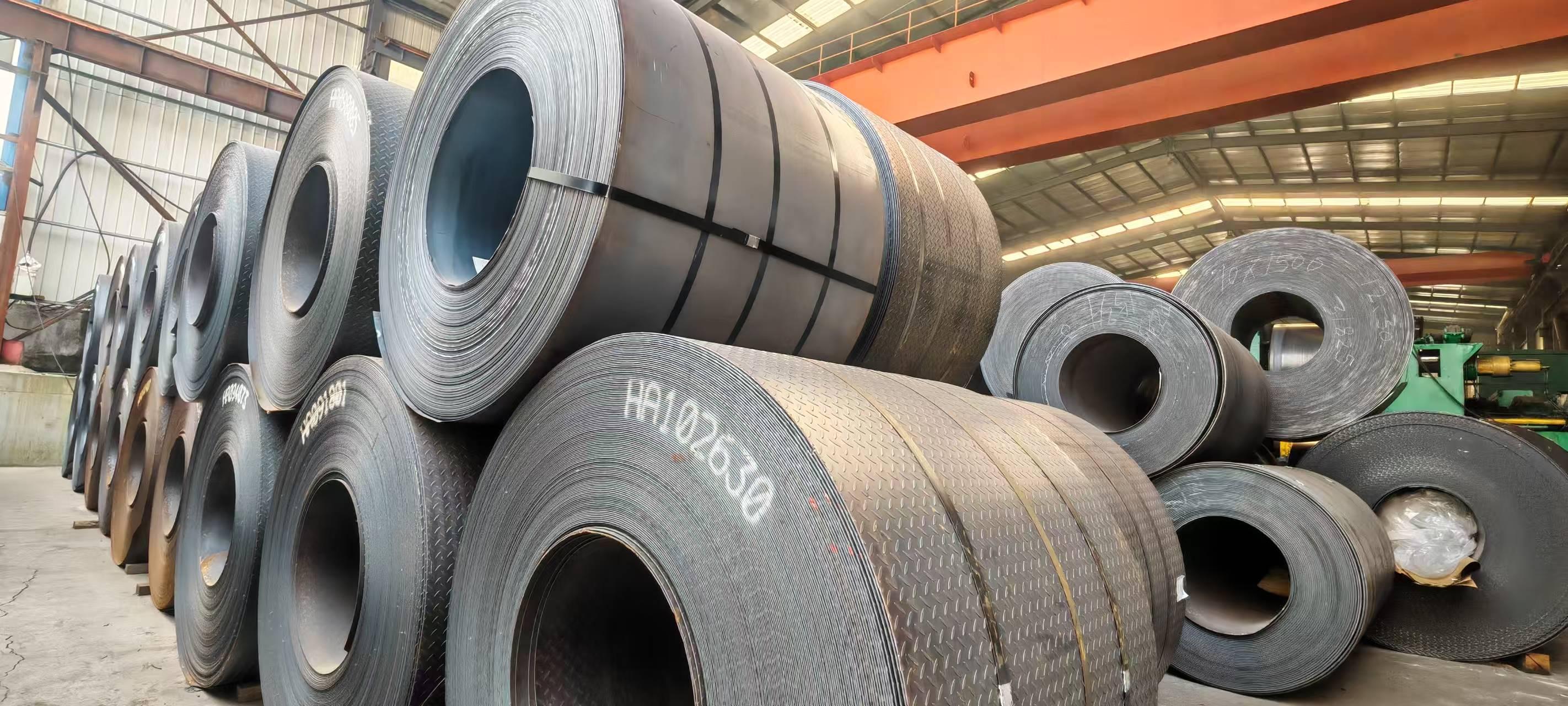
Taking a more detailed look at our curated list, it becomes clear that these suppliers stood out for reasons beyond basic offerings. We dug into their operational strengths, examining how they handle order fulfillment, quality control, and customer communication. One may excel in rapid prototyping, turning concepts into samples within days, while another might shine in sustainable material sourcing, offering eco-friendly alternatives without price hikes. This granular view helps you see not just what they provide, but how they deliver—and whether that aligns with your business rhythms.
We paid close attention to the less obvious facets that can make or break a partnership. This includes their flexibility in customizing packaging, responsiveness during unexpected delays, and willingness to accommodate last-minute design tweaks. Some suppliers demonstrated a proactive approach, suggesting cost-saving modifications that didn’t compromise quality. Others had dedicated account managers who acted as an extension of your team, bridging time zones and language gaps seamlessly. These insights come from real performance data and candid feedback, not just polished sales decks.
By going beyond the surface, we uncovered nuances that could influence your final decision. For instance, a supplier’s geographic location might impact shipping times for certain regions, or their in-house certifications could simplify compliance in your target market. Perhaps their vertical integration allows for tighter quality oversight, or their smaller client base ensures you receive priority attention. These details are often overlooked in standard vetting, but they play a pivotal role in long-term success. This closer inspection equips you with the clarity to choose a partner that truly fits, rather than one that simply checks the boxes.
The Hidden Factors That Influence Coil Quality
Coil quality often gets judged by visible traits—clean windings, consistent tension, and neat termination. But beneath the surface, less obvious forces can quietly erode performance long before a flaw is detectable. One of these is ambient moisture ingress during manufacturing. Even trace humidity can work its way between layers of insulation, setting the stage for electrochemical corrosion that degrades conductivity over months or years. It’s a slow, invisible decay that standard visual checks completely overlook.
Another factor that rarely makes it onto spec sheets is the thermal history of the wire itself. The drawing and annealing stages create microscopic stress patterns in the conductor. Without precise control of cooling rates and back tensions, these stresses linger, altering how the coil behaves under cyclic loading. Over time, the metal’s grain structure can shift just enough to introduce hotspots, where resistance climbs unpredictably. It’s a fatigue mechanism that lies dormant until it doesn’t.
Perhaps the most elusive variable is the interplay of materials at the interface. Adhesion between the conductor and its coating isn’t just about immediate bonding—it’s about how that bond ages. Subtle mismatches in thermal expansion coefficients can create shear stresses every time the coil heats up. Repeated cycles micro-fracture the insulation, turning a perfect coil into a ticking clock. These are the details that separate consistent quality from intermittent failure, and they live where light rarely reaches.
How to Match a Supplier with Your Project's Exact Demands
Finding a supplier who truly grasps what your project needs isn’t just about scanning catalogs or comparing prices. It starts with stripping your requirements down to their core—materials, tolerances, volume, delivery timelines, and any hidden constraints that might trip up a less attentive partner. The more precisely you can articulate these, the easier it becomes to spot a supplier whose past work and capabilities already dance close to your line. Don’t just list specs; share the context of how your product will be used, what stresses it will endure, and where past suppliers fell short. This clarity acts as a filter, repelling those who can’t deliver while pulling in the ones who’ve been quietly solving similar problems for years.
Once you’ve laid out your demands, shift from broadcasting to listening. Send your detailed brief to a handpicked list of suppliers—ones sourced through industry referrals, niche trade groups, or even tangentially related fields where their expertise might transfer. Then, pay more attention to the questions they ask than the polished quotes they give. A supplier who digs into your surface finish requirements, asks about your end-user environment, or suggests a material alternative you hadn’t considered is already proving they’re thinking alongside you. Reject any that respond with generic “we can do it all” copy-paste replies. Real alignment shows up in the nitty-gritty back-and-forth, not in the sales brochure.
The final check before committing is a working sample, but not just any sample—one made on the actual production line, not a carefully polished prototype. This exposes whether their shop can sustain quality when the pressure of a full run hits. Walk the sample through your entire acceptance routine: measure, test, stress it in weird ways. And if you can, visit their facility when they’re not expecting you. You’ll see their housekeeping, how they treat their tools, and whether the people who’d be making your parts are engaged or just going through motions. That’s where the match either tightens into a lasting fit or quietly falls apart.
Navigating Logistics Without the Common Headaches
Logistics shouldn't feel like a series of stressful surprises. When shipments get delayed, tracking goes silent, or unexpected fees pop up, it's easy to lose trust in the process. The key is working with systems and partners that prioritize transparency at every stage—real-time updates, clear pricing, and proactive communication aren't luxuries anymore; they're essentials that keep your operations running smoothly.
Another common frustration is the lack of flexibility when things inevitably shift—a last-minute order change, a customs hold-up, or a sudden spike in demand. Rigid logistics providers force you into a box, but the right approach builds adaptability into the core of your supply chain. Customizable solutions and responsive support teams mean you can pivot without the panic, turning potential headaches into manageable adjustments.
Ultimately, peace of mind comes from knowing that the details are handled long before they become problems. Advanced planning tools, predictive analytics, and a human touch combine to spot issues early and resolve them quietly in the background. That way, you're free to focus on growth instead of firefighting—proof that logistics can be a quiet backbone, not a constant source of noise.
What the Future Holds for Hot Rolled Coil Sourcing
The landscape of hot rolled coil procurement is shifting under the weight of decarbonization mandates and technological breakthroughs. Green steel initiatives are gaining traction, with mills investing in electric arc furnaces and hydrogen-based direct reduction to curb emissions. Buyers are no longer just chasing the lowest price; they're weighing the carbon footprint of each coil, often willing to pay a premium for cleaner material as regulatory pressures mount.
Digital platforms are rewriting the sourcing playbook, injecting transparency into a market long dominated by opaque negotiations. Real-time inventory tracking and predictive analytics let procurement teams sidestep shortages and lock in pricing during dips. The rise of blockchain-backed certifications is also cutting through the noise, giving buyers immutable proof of origin and sustainability claims without relying on a web of intermediaries.
Geopolitical currents are redrawing supply maps, pushing companies to rethink overreliance on single regions. Nearshoring and strategic stockpiling are becoming standard hedges against trade disputes and logistics snarls. At the same time, secondary and excess prime markets are maturing into reliable sources, offering flexibility that rigid long-term contracts simply can't match in a world of constant disruption.
FAQ
Reliability boils down to more than just price. Look for suppliers with consistent mill certifications, transparent quality control processes, and the ability to provide material test reports without delay. The best ones also offer flexible order sizes and have a proven track record in your specific industry.
It varies by region and need, but globally recognized names include ArcelorMittal, Nippon Steel, POSCO, and Baosteel. For more specialized service or distribution, companies like thyssenkrupp Materials Processing or Samuel, Son & Co. earn frequent mentions from fabricators.
Notice how they handle inquiries about specs. Suppliers invested in quality will readily discuss gauge tolerance, crown, and surface finish for each grade. They often go beyond the standard paperwork, sometimes offering third-party inspection coordination or access to their own testing facilities.
Absolutely. In the Americas, Nucor and SDI are powerhouses for specific grades, while Europe has long-standing integrated mills like Tata Steel Europe. Many Asian markets have highly competitive medium-scale mills that offer personal service and quicker turnaround for nearby customers.
Real partnerships show in inventory management programs, just-in-time delivery logistics, and technical support teams that understand your manufacturing pain points. Some even assist with design for manufacturability or suggest alternative grades that might save you money without cutting corners.
Chasing the lowest per-ton price without considering the total cost of ownership. Inconsistent thickness or hidden-scale can eat up your savings in rework or scrap. Always request a sample run for new suppliers and factor in their track record on meeting dimensional tolerances over an entire production campaign.
Many service centers and re-rollers specialize in off-spec widths or non-standard lengths. Look for those with slitting and cut-to-length lines. They’re often more nimble than integrated mills and may accept smaller trial orders when you need to test a new grade or application.
Conclusion
In a market flooded with options, finding reliable hot rolled coil suppliers can feel like sifting through endless claims of quality without substance. Our top 10 picks cut through the noise by focusing on what truly matters: consistent coil flatness, precise gauge control, and a demonstrable commitment to reducing surface defects. Each supplier on this list has earned its place not through glossy marketing but through verifiable performance, whether serving automotive stamping plants, construction beam fabricators, or energy sector projects. We’ve looked beyond basic certifications to uncover how these mills handle alloy customization, manage thermal variability during rolling, and maintain tight tolerances week after week. You’ll notice some common threads among the best: proactive communication about heat lot traceability, in-house lab testing that goes beyond the minimum, and a refreshing willingness to adapt processing windows to match your downstream operations. These aren’t just transactional vendors; they’ve become strategic partners who understand that a single inconsistent coil can ripple into costly line stoppages or field failures. The selection also reflects a balance between massive integrated mills with dedicated coil processing lines and nimble regional players who offer flexibility that giants sometimes can’t match.
Beyond the steel itself, we examined the less obvious aspects that make or break a supplier relationship. Logistics can turn a quality coil into a nightmare if delivery schedules don’t align with your production rhythms, so we prioritized suppliers with a proven track record in reliable just-in-time shipments and transparent lead-time communication, especially during peak demand. Another hidden factor is the supply chain’s resilience: how quickly can a supplier reroute coils when a line goes down, or how well do they handle returns on a non-conforming batch without finger-pointing? We’ve also assessed their stance on the industry’s evolving landscape—from investments in low-carbon steelmaking to digital tools that give you real-time mill updates. A few of our picks are already piloting predictive quality analytics that can flag potential issues before a coil even leaves the plant. Matching a supplier to your exact demands isn’t about picking the biggest name; it’s about finding the one whose quirks complement yours. Whether you need ultra-thin gauge for intricate stampings or robust 12-mm plate coils that can withstand high-rise stresses, these suppliers bring distinct strengths. The future of hot rolled coil sourcing will reward those who look beyond price per ton and build relationships rooted in technical alignment and unwavering reliability—and this list gives you a running start.
Contact Us
Contact Person: Zoey
Email: [email protected]
Tel/WhatsApp: +86 15865577002
Website: https://www.sanhesteels.com